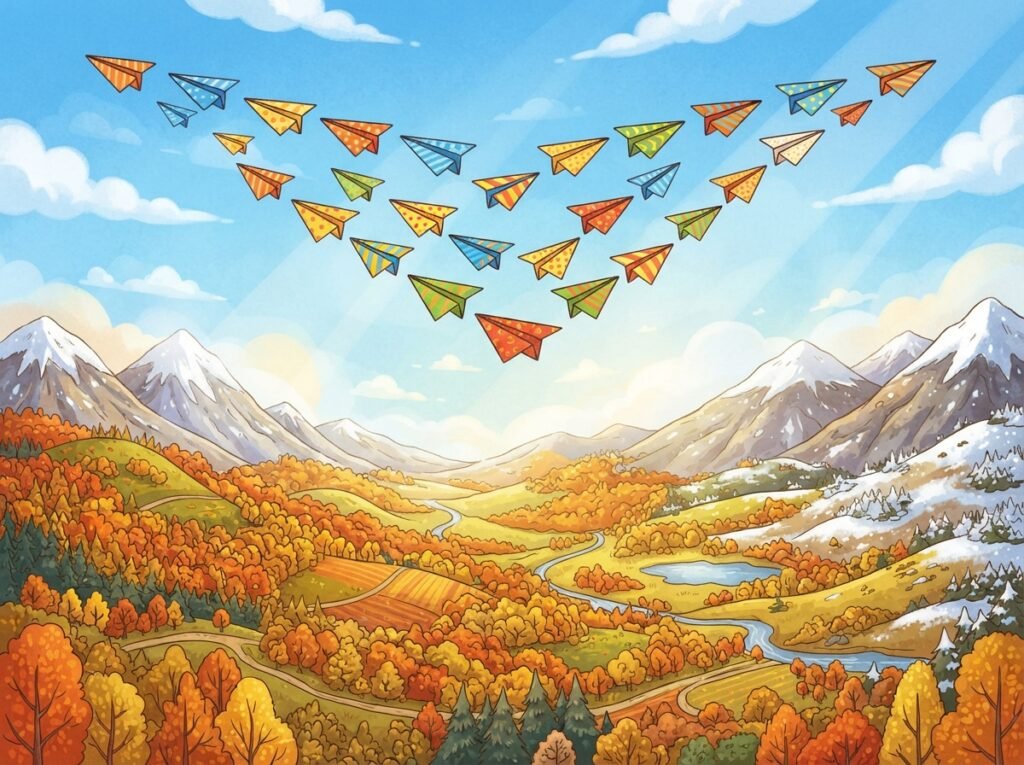
Next fall, when you see geese heading south for the winter, flying along in a V formation, you might consider what science has discovered about why they fly that way.
As each bird flaps its wings, it creates an uplift for the bird flying behind it. By flying in formation, the whole flock can travel much farther with less effort.
The geese also take turns leading.
The bird at the front works the hardest because it receives no help from another bird.
When it becomes tired, it moves to the back, and another goose takes its place.
The birds behind the leader constantly honk.
Some scientists believe these sounds encourage the birds at the front to keep going.
One day, a young goose asked an older goose, “Why don’t we just fly alone?”
The older goose smiled.
“Because alone, you may get there faster sometimes. But together, we can go much farther.”
The young goose thought about this.
“So the strongest goose should always lead?”
“No,” said the older goose. “The strongest leads when it is needed. When it becomes tired, the others help carry the responsibility.”
The young goose looked at the flock.
“And what happens if one goose falls behind?”
The older goose replied, “The others slow down.”
“Even if it makes the journey longer?”
“Especially then.”
The young goose smiled.
That day, he finally understood the secret of the V formation.
The geese weren’t simply following one another.
They were helping one another.
And perhaps that’s a lesson worth remembering.
In life, we don’t always need to be the one in front.
Sometimes we lead.
Sometimes we follow.
And sometimes the most important thing we can do is make sure nobody gets left behind.